
Spray foam is the insulation we recommend most for metal buildings and barndominiums in the Texas Hill Country. It seals air leaks, stops condensation on steel, and keeps cooling bills down through our long, hot summers. But not all spray foam is the same. Below we cover what it does well and how to choose between open cell and closed cell.
The benefits of spray foam insulation
Spray foam goes on as a liquid and expands to fill every gap, crack and corner. That one fact drives most of its advantages.
Air sealing. Foam fills gaps around framing, purlins, girts and penetrations. Batts and blankets leave seams where air moves freely. Less air leakage means less heat getting in during summer and out during winter.
Lower energy bills. A tighter building lets your HVAC system run less and often lets you size it smaller. Savings vary by building, but spray foam typically outperforms fiberglass of the same R-value because it stops air movement too.
Condensation control on metal. Warm, humid air hitting cold steel panels causes "sweating" that drips, rusts fasteners and soaks insulation. Foam applied directly to the panel keeps moist air away from the steel.
Higher R-value per inch. Spray foam delivers more insulation in less space than most alternatives, which matters in wall and roof cavities with fixed depth.
Moisture and pest resistance. Foam doesn't give insects or rodents an easy place to nest, and it won't sag or settle over time the way loose fill and batts can.
Quieter interior. Foam dampens rain noise on metal roofs and outside noise through the walls.
Long service life. Properly installed, spray foam lasts the life of the building with no replacement or top-ups.
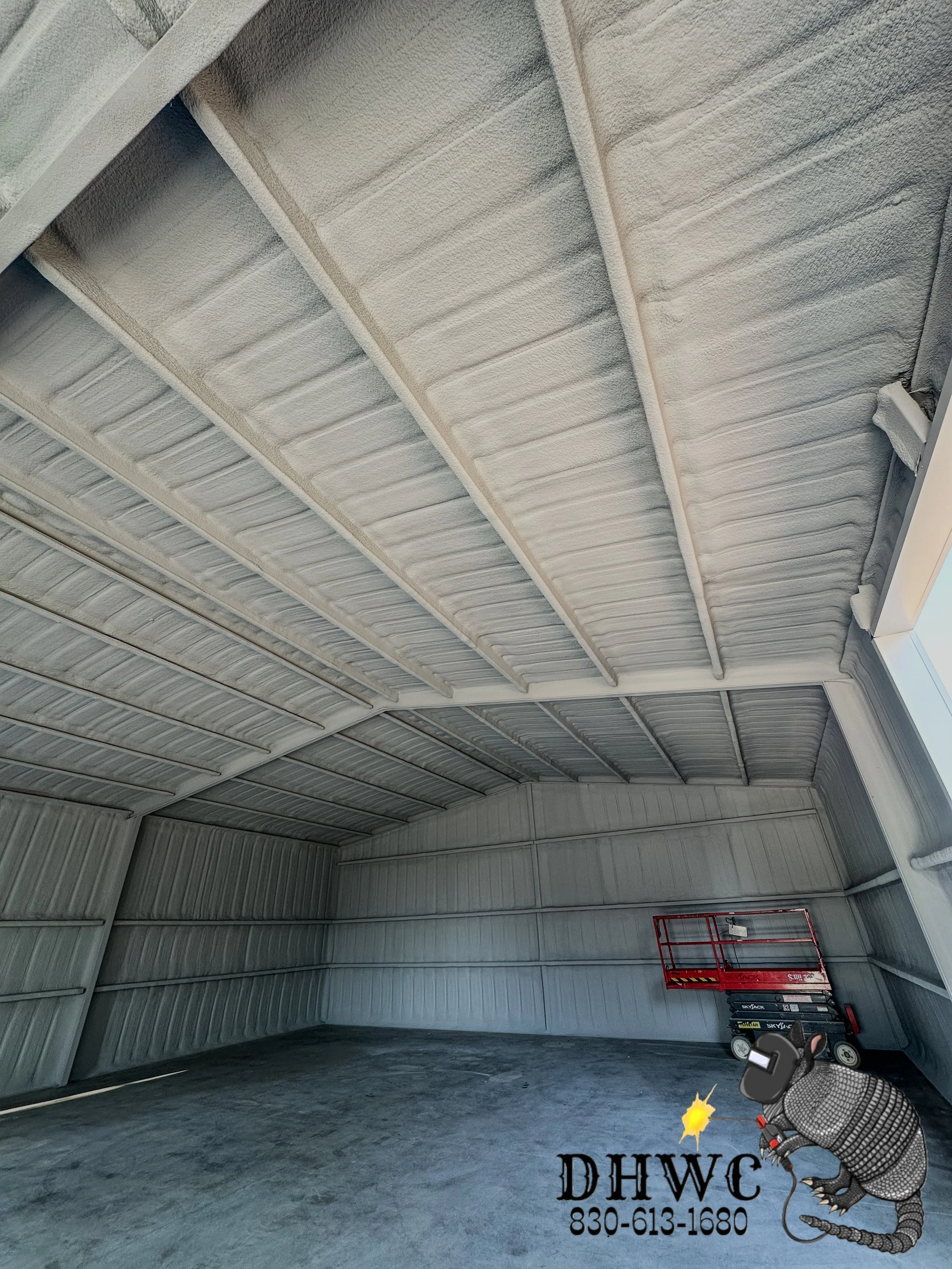
Foam sealing the roof and wall panels of a DHWC metal building, painted gray for a clean, finished look. With the steel covered, humid air can't reach it and condense.
Open cell vs. closed cell
The difference is in the foam's structure. In open cell foam, the tiny bubbles are broken, so the material is soft and spongy. In closed cell foam, the bubbles stay sealed and packed tight, so the material is rigid and dense.
Open cell foam is lighter and expands much more as it's sprayed. It fills large cavities quickly, absorbs sound well and costs less per square foot. It lets water vapor pass through, so it doesn't act as a vapor barrier.
Closed cell foam is denser and harder. It has roughly twice the R-value per inch, blocks water vapor and liquid water, and adds stiffness to the walls and roof it's bonded to. It costs more, but you need fewer inches to hit the same R-value.
At a glance
R-value per inch: Open cell about 3.5–3.8 · Closed cell about 6–7
Density: Open cell about 0.5 lb/ft³ (soft, flexible) · Closed cell about 2 lb/ft³ (rigid)
Vapor barrier: Open cell no · Closed cell yes, at about 1.5–2 in.
Water resistance: Open cell absorbs water · Closed cell resists water
Structural strength: Open cell none · Closed cell adds racking strength
Sound dampening: Open cell better · Closed cell good
Cost: Open cell lower · Closed cell higher
Figures are typical industry ranges and vary by product.
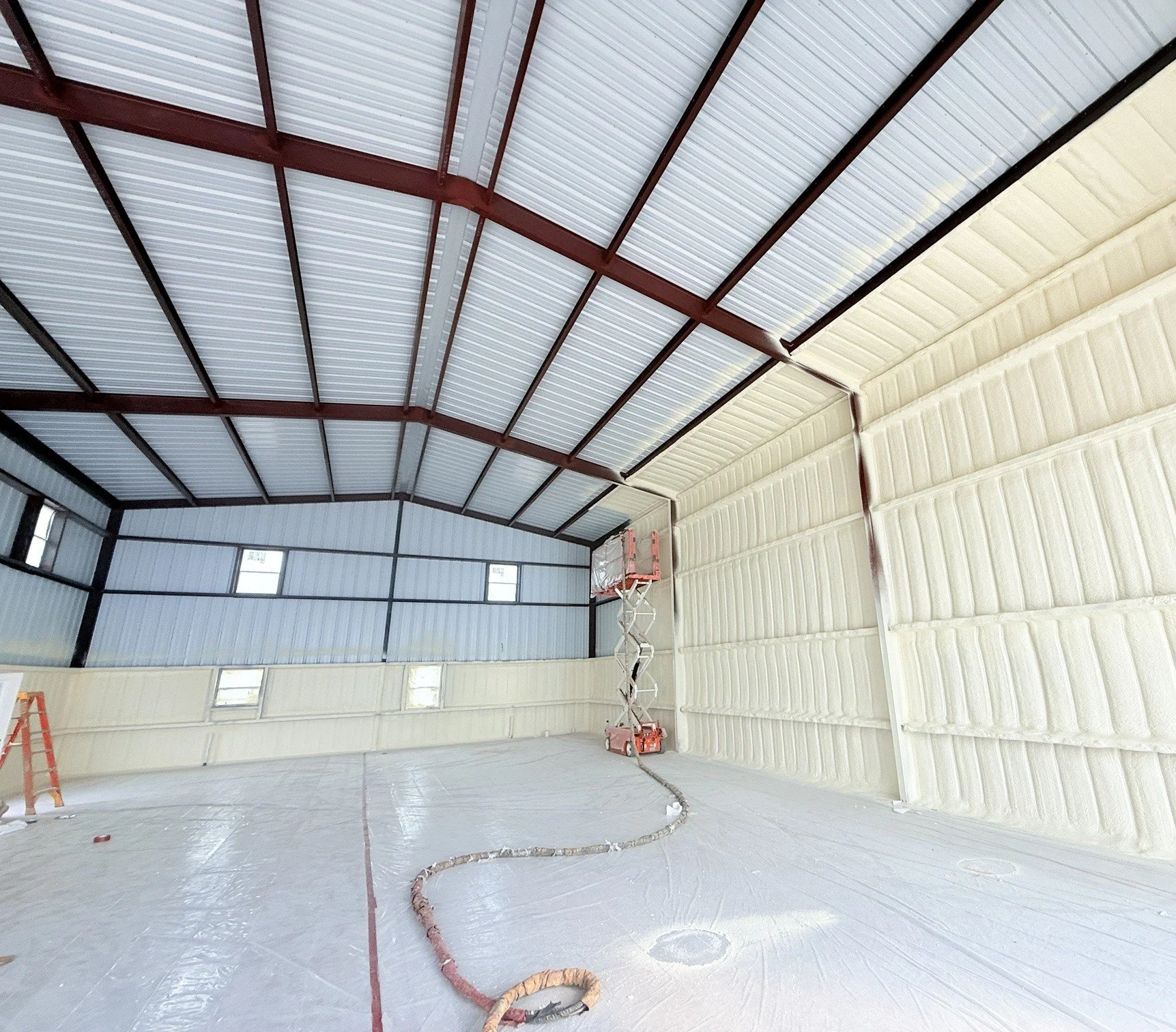
Foam going on over the panels of a red iron building: sprayed walls on the right, bare panels on the left.
Which one is right for your building?
For most metal buildings, closed cell is the safer choice anywhere foam touches steel. Its vapor resistance is what stops condensation on metal roof and wall panels.
Steel-framed barndos, shops and garages: Closed cell on the roof and wall panels. It controls condensation, resists moisture and adds rigidity.
Hybrid-framed barndos (steel roof, wood walls): Closed cell under the metal roof. Open cell can work in the wood-framed walls, where its lower cost and sound dampening pay off.
Interior walls and ceilings between rooms: Open cell, mainly for sound control.
Tight budget, conditioned space only: Open cell can be a good value if condensation risk is managed with a proper vapor retarder and ventilation plan.
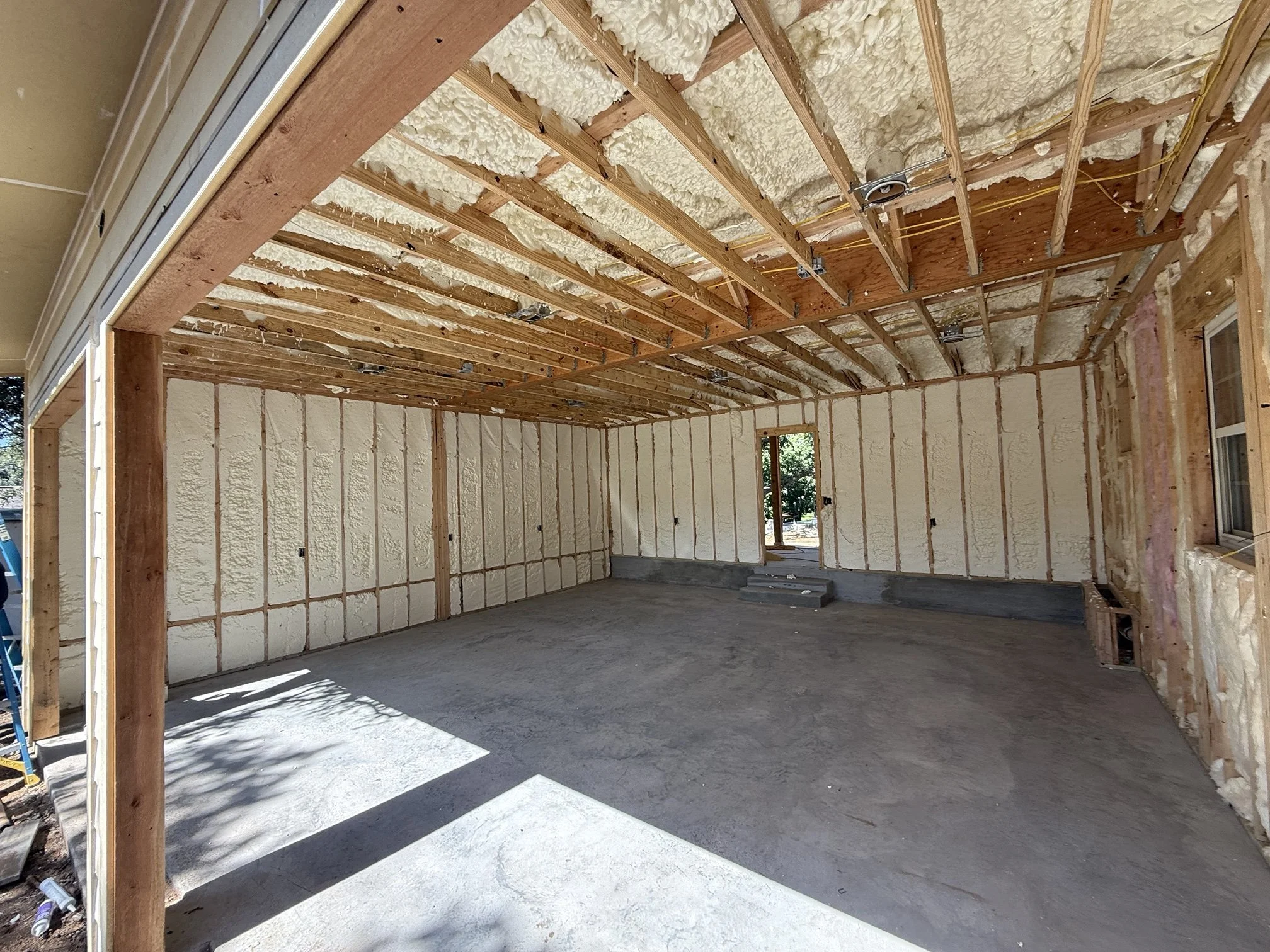
Spray foam in the stud walls and roof deck of a wood-framed build.
Many of our projects use both: closed cell where moisture and metal meet, open cell where cost and quiet matter more.
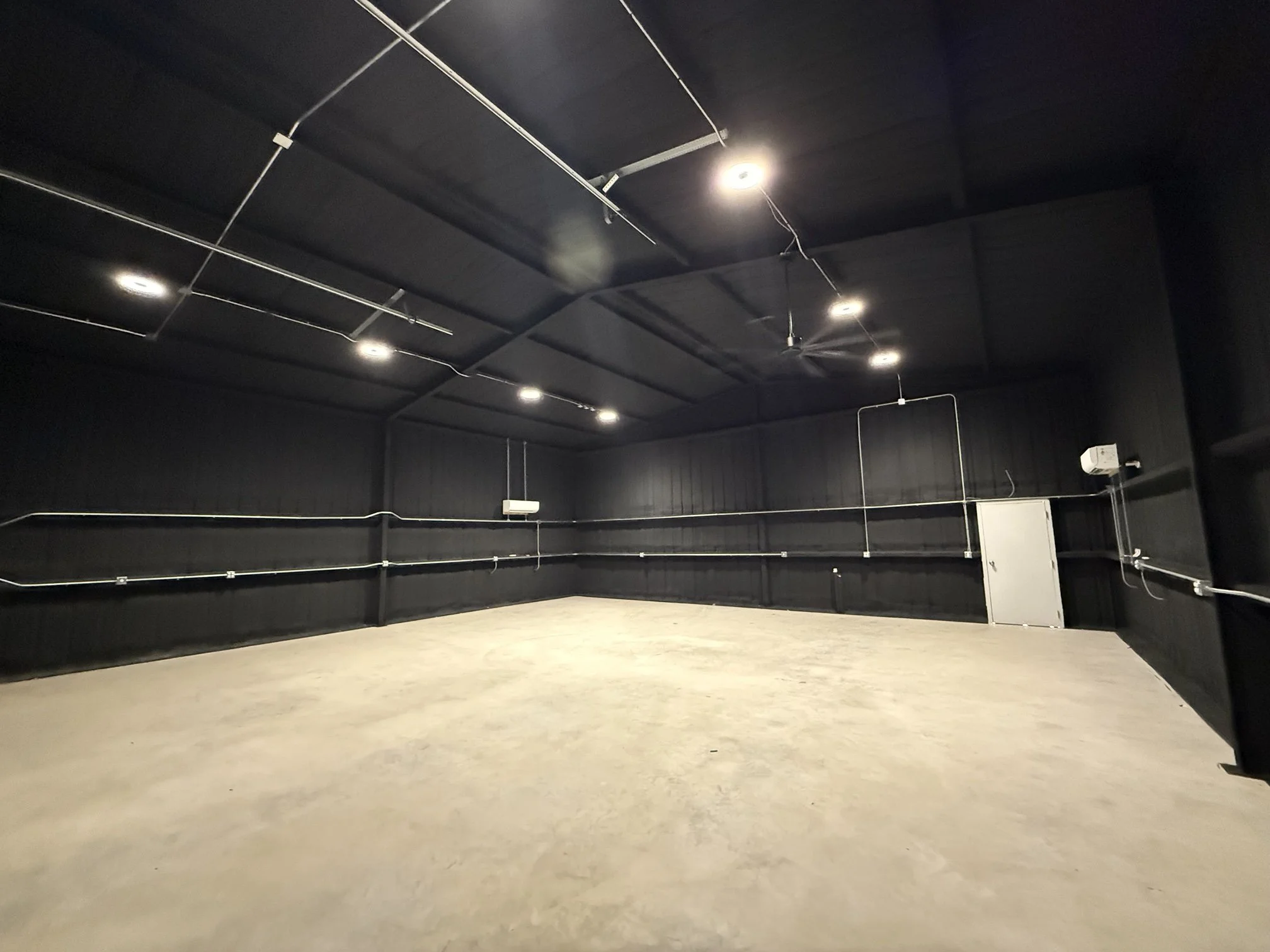
A finished DHWC shop: foamed walls and roof painted black for a sharp, finished look, with lighting and mini-splits installed.
Plan your insulation with DHWC
The right insulation plan depends on your framing, how you'll use the space and your budget. DHWC builds steel-framed and hybrid-framed barndominiums and metal buildings across the Hill Country from our base in Kingsland, TX. Call us at (830) 613-1680 or reach out through dhwcbuildings.com to talk through your project.
